

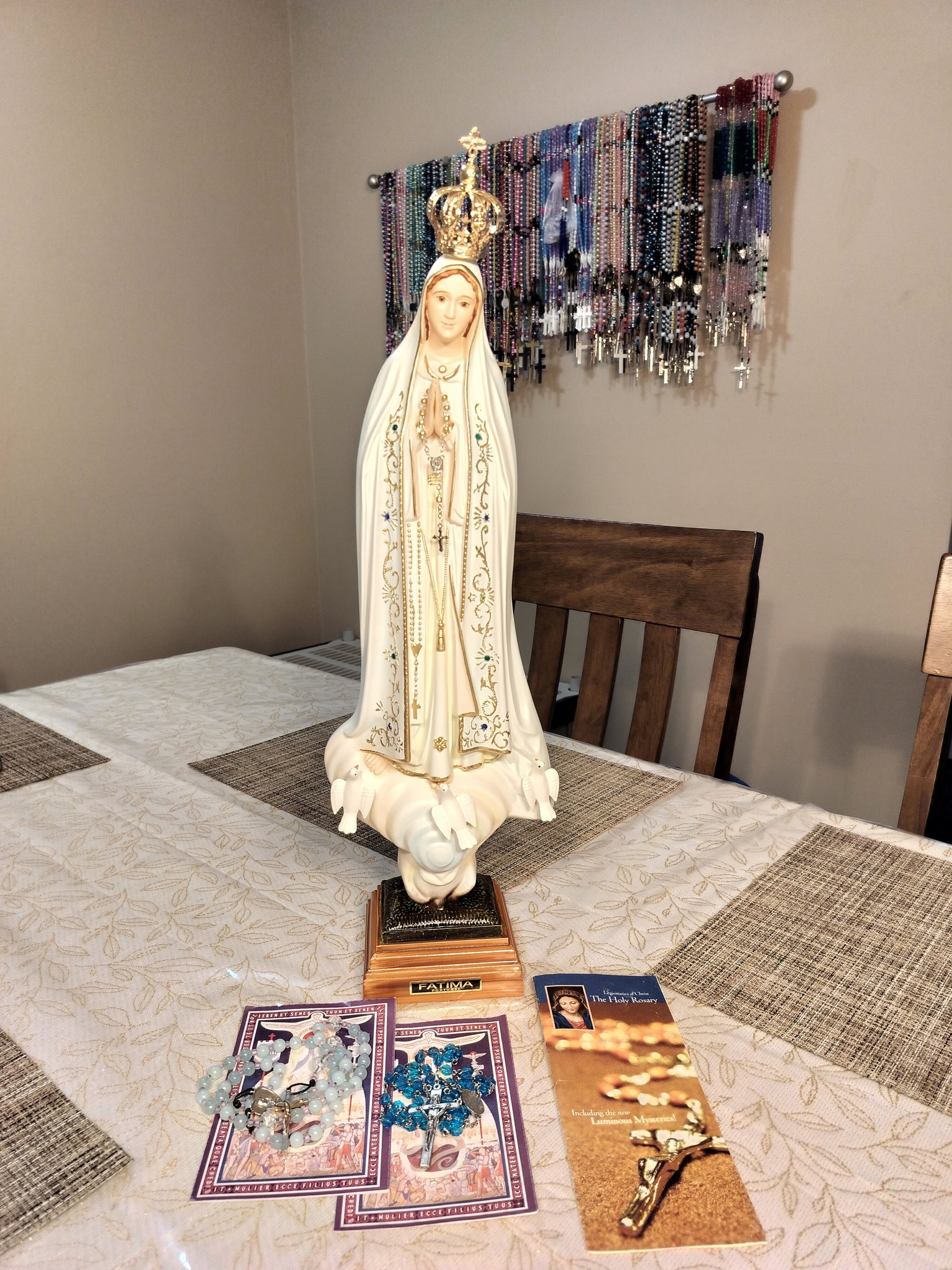
There’s something wonderful about how the Hail Mary begins; we’re greeting Mary with the exact same words the angel Gabriel used at the Annunciation. Think about that for a moment: “Hail Mary, full of grace, the Lord is with you.” These aren’t just devotional phrases we’ve crafted over the centuries; they’re God’s own words, spoken through His messenger to announce the most pivotal moment in human history. The Catechism reminds us that this prayer is deeply biblical (CCC 2676), which means every time we say these opening words, we’re participating in that sacred dialogue between heaven and earth. We get to share in Gabriel’s role as messenger, carrying the same greeting that once changed everything. How beautifully fitting that our most beloved prayer to Mary begins with Heaven’s own salutation to her.
The prayer continues with Elizabeth’s Spirit-inspired exclamation: “blessed are you among women, and blessed is the fruit of your womb, Jesus.” There’s such joy in these words, imagine Elizabeth, filled with the Holy Spirit, practically bursting with recognition of who Mary is carrying. But notice how naturally Jesus becomes the center of our praise? The Catechism makes clear that all authentic devotion to Mary leads us directly to her Son (CCC 2679). When we say “the fruit of your womb, Jesus,” we’re celebrating the mystery of the Incarnation in the most personal terms possible: God chose to enter our world through a mother’s love. Mary isn’t competing with Jesus for our attention; she’s the one pointing us toward Him with the enthusiasm of someone who knows Him better than anyone else ever could.
The second half brings us to “Holy Mary, Mother of God”, and here we encounter one of the Church’s most profound theological treasures. This isn’t just a beautiful title; it’s a declaration that protects the truth about Christ Himself. When the Council of Ephesus defended this designation in 431, they weren’t just honoring Mary; they were safeguarding the mystery of who Jesus is: truly God and truly man (CCC 495). It’s remarkable how loving Mary properly actually teaches us to love Jesus more fully. When we call her “Mother of God,” we’re celebrating the stunning reality that our Savior chose to have a mother, to be vulnerable and dependent, to experience human love from His very first moments of life.
“Pray for us sinners, now and at the hour of our death” – there’s such honest humility in these words. We’re acknowledging both our present struggles and our future fears, and we’re asking for the intercession of the one who stood faithfully at the foot of the Cross. The Catechism speaks of prayer as our vital connection to God throughout life’s journey (CCC 2677), and there’s something deeply consoling about knowing we can turn to the Mother of our Savior in both our daily challenges and our ultimate passage from this world. Mary understands what it means to trust God when the path isn’t clear, to say yes even when it’s costly, to remain faithful even when your heart is breaking.
Archbishop Fulton Sheen captured something beautiful about the repetition we experience in the rosary. When someone once criticized him for the “monotonous” repetition of the Hail Mary, he asked them about their own experience of love. “There is no repetition in ‘I love you.’ Because there is a new moment of time, another point in space, the words do not mean the same as they did at another time or space.” Archbishop Fulton Sheen explained that when we say the rosary, “we are saying to God, the Trinity, to the Incarnate Saviour, to the Blessed Mother: ‘I love you, I love you, I love you.‘” Each Hail Mary is like giving Our Lady a spiritual hug, telling our heavenly Mother that we love her, we trust her, we need her maternal care in our lives.
There’s something so tender about this relationship we have with Mary through this prayer. When we string together ten Hail Marys in a decade, or fifty in a full rosary, we’re not being repetitive; we’re being relational. We’re sitting with our spiritual Mother, letting her know again and again how much we love her, how grateful we are for her yes to God, how much we need her to pray for us. It’s the same way a child might tell their mother, “I love you” multiple times throughout the day, not because they forgot they said it earlier, but because the heart keeps overflowing with gratitude and affection. The Hail Mary becomes our way of staying close to Mary, of maintaining that intimate conversation with the one who knows better than anyone how to bring us closer to Jesus.
2025 – written by James Dacey Jr., OFS