
For Vincenza Maracle, In Memoriam
a great lady, a good friend
A little learning is a dangerous thing;
Drink deep or taste not the Pierian Spring.
Be not the first by whom the new are tried,
Nor yet the last to lay the old aside.
Alexander Pope (1688-1744)
An Essay on Criticism
PART ONE
Preface
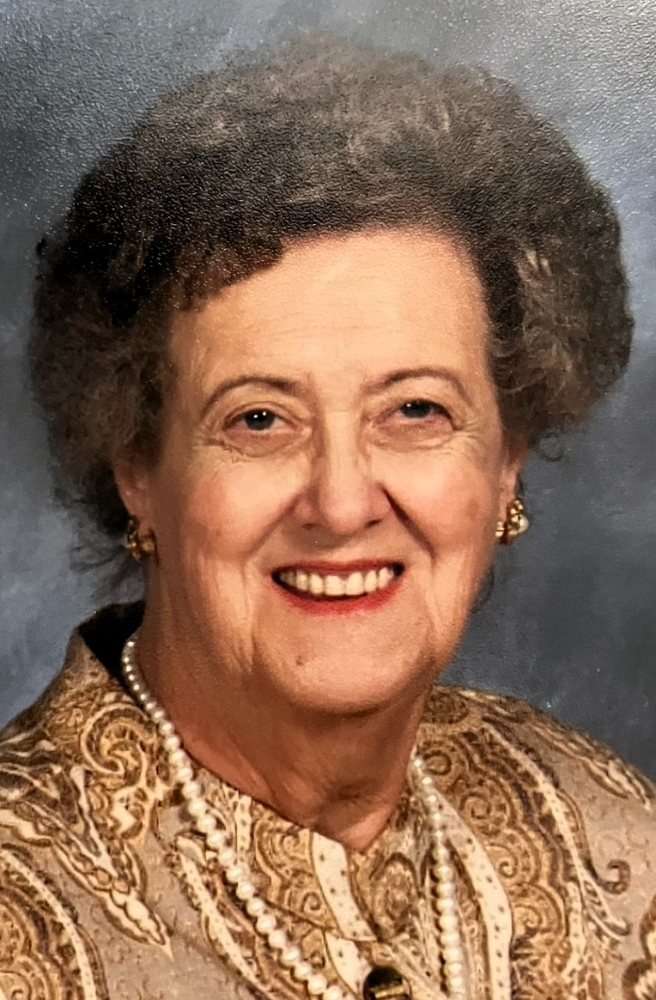
Great Books for Good People is a reflective essay on literature and humanity. It is dedicated to the memory of a great lady, Vincenette M. Maracle who died just short of reaching 90 years on September 2024. Vincenza was a great lady and, in some ways, unique. She lived an interesting life (1934–2024) as a daughter, wife, mother of a large family, a devout Roman Catholic, and notably an avid reader who was familiar with many of The Great Books of the Western World. This prodigious compendium of writings came about in 1952, the brainstorm of Robert M. Hutchins and Mortimer J. Adler, editors of The Great Books, an encyclopedic, organized series and that was generously underwritten by the financial support of benefactors.
The cohesive element of the Great Books is dependent upon the Syntopicon, a two volume anthology of 102 topics ranging from Angel to Love – Volume Two – and Man to World – Volume Three – and is a reference work reflecting writers who are from antiquity and others also anticipating the future. There are over 50 writers represented in The Great Books. The list of authors is not exhaustive, but it does suggest the unifying, focused principles of understanding and appreciating the Humanities as a collection of connecting themes. To this end the basic premise of The Great Conversation (Volume One) is to espouse the value of an education by being acquainted with masterpieces of writing in an effort to access great literature with the goal to reappraise and consolidate the literary traditions of the West for all future generations – not just the past and present.
Vincenza Maracle was my muse. When she visited the Shrine or when I visited her at home, we often conversed and shared the literature of The Great Books. And, believe me, Vi was very informed and knowledgeable – not false or pedantic. She was a simple, humble lady who enjoyed great writing from equally great writers. Vi is missed by so many people. Remembering her and admiring her intellect are treasured moments – a remembrance of things past, especially her unwavering faith in God, family, and friends – a wonderful mentor – a great lady who not only enjoyed the great books but also enjoyed talking about them. We were a reciprocal audience loving many of the same things that wound up being a part of our great conversations.
Thank you, Vi – you are missed but not forgotten. You are the epitome of how greatness is viably present to those who seek.
Be not afraid of greatness: some are born great, some achieve greatness and some have greatness thrust upon them.
William Shakespeare (1564-1616)
Twelfth Night
PART TWO
Great Books for Good People
Life consists of mostly small gestures that may seem trivial but also are restorers of human dignity and hope. Moreover, quoting Mother Teresa of Calcutta, “every drop of water is important because the sea is made of many drops.” To learn is to seek, and to love is the vocation that envelopes and animates all other virtues.
The Victorian British writer, Alfred Lord Tennyson summarizes and recapitulates this notion majestically in Ulysses, a poem that is actually a dramatic monologue on the purpose-driven life:
…that which we are –
One equal temper of heroic hearts,
Made weak by time and fate, but strong in will
To strive, to seek, to find, and not to yield.
And so, the questions arise out of the ashes where they lie dormant in a deadly coldness. Should we read great literature and make good use of time in doing so? The answer to this question deserves a good response. Should we desire truth and nothing but the truth? Should we desire facts and nothing but the facts? And is there a difference between facts and truth?
Furthermore, if we want to see the truth and not merely physical facts, then we need to seek beyond what we can see under a microscope or through a telescope. It is to our advantage to join in the Great Conversation that has been going on for a very long time in the pages of The Great Books, a magnificent anthology of illustrious, readable, noteworthy writers and their writings.
Somehow, The Great Books invite us to see that “the world is charged with the grandeur of God in a grandeur that is shaken out and shines like crystal foil.” Fragile and terrible, and yet somehow always a thing to behold. As poet Gerard Manley Hopkins marvels at the immensity of God while someone else says that some of us wallow in the gutter, while still others of us are content merely to look at stars as a remote experience. Admittedly, we need – all of us – to look up in wonder if we want to see the goodness, truth, and beauty of God’s grandeur and not merely the wickedness and ugliness of the gutter. Reading great literature helps us to discern the dubious lies of prevarication that ensnare us to rationalize and ignore what is truly valid as truth. Life is a journey and the literary masterpieces of The Great Ideas of the Western World help us who read them by guiding us subtly to look at ourselves and our neighbors more clearly with circumspection, not judgment or prejudice.
Consider the German philosopher Friedrich Nietzsche (1844-1900), rarely read and somewhat misunderstood. Nietzsche reasoned that Christianity’s emphasis on life after death makes many believers less able to cope with the struggles of daily life. He argued that the ideal human being has the potential to channel feelings creatively instead of suppressing them. Reading great books can only potentially help us to follow a Nietzschean syllogism – “that which does not destroy us can then make us stronger.” Furthermore, reading the titular entries in The Great Books anthology is akin to taking us on a journey of discovery, walking down a mirrored hallway that takes us beyond the physical world to go beyond a mere reflection as an ordinary mirror does. By extension, the journey shows us more lucidly what we are thinking and feeling about both ourselves and others – especially our neighbor.
Thus, the mirror image of our “investigation” can show us who we are as human persons and not merely as physical bodies. Yes, we should read great literature because reading good literature demonstrates something greater and shows us a potentially imminent greatness as to who we should be and who we should not be. The Great Books are not, however, designed to be overly instructional, but rather to be a touchstone of informed thinking.
Ultimately, the lessons of The Great Books is the lesson of history simply told well as being required. As noted British writer C.S. Lewis quipped, “If we keep our eyes on heaven, we will make the world a better place.” In other words, the totality of human history is enlightened while always keeping our eyes on the final victory. It is necessary to see the ultimate defeat of life but not to lose sight of heaven. Fighting the long defeat of life, we endure the travail of living now waiting patiently for the final victory of heaven. Therefore, fight the fight bravely. Let the Great Books help each of us to keep our eyes on the final victory.
As an afterword, the informed reader knows that great literature is far from being a dead relic from the past that is prone to being both archaic and obsolete. For some this may be so, and yet the literary works compiled in The Great Books of the Western World and cross-referenced in the two volume index called the Syntopicon are far more than defunct relics of the past. In fact, the writers included in topical titles manifest crucial issues and are directly relevant to the concerns of present day modern humanity.
Thus in a cultural milieu that fosters toxic masculinity and militant feminism as opposite ideologies pitted against each other, the gifted literary greats of the past posit for us the relevance of an alternative view of true, authentic personhood, male and female, that embraces a viable supplanter of narrowminded prejudice in an exchange for thoughts and attitudes which foster an animated dialogue instead of an embedded, obstinate, polarizing grid-lock.
An authentic vision of our common humanity is a clarion call to include and work out salvation with fear and trembling (cf. Phil. 3:12). The informed conversation with the great books and the accompanying great ideas aggrandizes and strengthens in a prismatic way the ongoing development of human knowledge in a sincere search for the infinite potential of realizing the anima mundi, the universal Life Force (cf. Phil. 3:12).
PART THREE
Looking at life then as through a prism-like perception, a subjective and objective viewpoint of all that envelopes us, we search for meaning in life’s journey. We focus our attention on a single work from The Great Books of the Western World, namely, The Divine Comedy by Dante Alighieri (1265-1321). Perhaps the greatest work ever written, as a panoply of the 14th Century late Middle Ages, Dante’s Comedia is an ambitious three part story. The theme of the poem is a memento mori, a reminder of death. Dante’s memorable work encourages the reader as Everyman, to ponder the transient fragility of life and the four last things (Death, Judgment, Heaven, and Hell). As the author, it is Dante himself who also places himself in the poem. The action of the poem proceeds as that of a narrative. Dante is the protagonist. Purgatorio is the setting.
The story begins on Holy Thursday evening and ends on Easter Sunday morning. In the name of God, the Blessed Mother’s prayer greets the two travelers on their way. It is now Good Friday, and Dante and his mentor Virgil approach the gateway to Hell. “Abandon hope, all of you who enter here.” And so the two descend into the seven circles of Hell thereby beginning their ominous journey. Reaching the lowest, final circles, the travelers arrive at the foot of a great stairwell. Now in a temporary place of purgation, the seven deadly sins are shown thus making the poem a personal “confession.” It is also an allegory of universal significance, exemplary of 14th Century Italy, and in many ways today’s modern world. It shows ourselves in a dramatic story and is a mirror of humanity to those being punished. They see Satan writhing in painful torture. He is the Prince of Darkness and Evil who lives in arrogant isolation. “Better to reign here than to serve in heaven” cf. Milton, Paradise Lost.
The two travelers climb the steps of Purgatory, a place and time of purification and retribution. Although Hell is described with symbolic images, Purgatory is the place for Dante the poet to display his literary skills with signs and wonders, poetic images, and a rich effulgence of anticipated, brilliant, Renaissance colors. The dazzling color scheme of Dante’s genius shines as the journey brings him to the open door of ascent to heaven where time-traveling the beautiful Beatrice becomes his guide. She is the author’s beloved friend who died at an early age. The heavens are a series of ascents – earth is the center of the universe and the planets and sun orbit around earth according to Ptolemaic astronomy. This part of the pilgrim-journey is union with God in heaven – to follow Christ and his Cross. The climax of their traveling is a beatific vision of God as Dante in a moment of ecstasy meets St. Bernard preaching about the Virgin Mary to the attendant Saints, all of whom acknowledge Mary as Theotokos, Mother of God. If we believe that she who was immaculately conceived acknowledges her Son as the one who begets and is begotten, she is a loving sign of reconciliation and salvation for all.
The Great Books and their ideas encourage us to read Dante’s Divine Comedy in a way for the reader to look forward and to pursue the constant journey of life for our salvation. Dante is our teacher who always looks to raise our greatest joy to possess the Sign of greatest joy in life. Dante’s journey is also ours, and he invites us to be good readers, to possess life abundantly and authentically. His sojourn is our ascent and the way to heaven. Life is a journey, our movement from here to there, and love is the conduit that includes everything to insure our safe arrival.
There is a land of the living and a land of the dead, and the bridge is love – our greatest joy, our only hope. The Great Books provide us with the capacity to seek understanding as a way of knowing the liberating power of truth.
Fr Richard Delzingaro, CRSP
Most Holy Trinity Sunday – 2026
In Loving Memory of Vincenette M. Maracle
A limb has fallen, from our family tree, I keep hearing a voice that says, “Grieve not for me, Remember the best times, the laughter, the song. The good life I lived while I was strong. Continue my heritage, I am counting on you, keep smiling and surely the sun will shine through. My mind is at ease; my soul is at rest. Remembering all how I truly was blessed. Continue traditions, no matter how small, go on with your life, do not worry about falls. I miss you all dearly, so keep up your chin, Until the day comes, we are together again.”